
Elipse Power Renewable
Elipse Power Renewable is a platform for automating and managing wind and solar farms. It integrates turbines, inverters, and substation IEDs from any manufacturer into a single hub. The solution includes a standardized modeling tool for wind turbines that makes data more reliable for auditing and reduces financial losses in contracts with vendors.
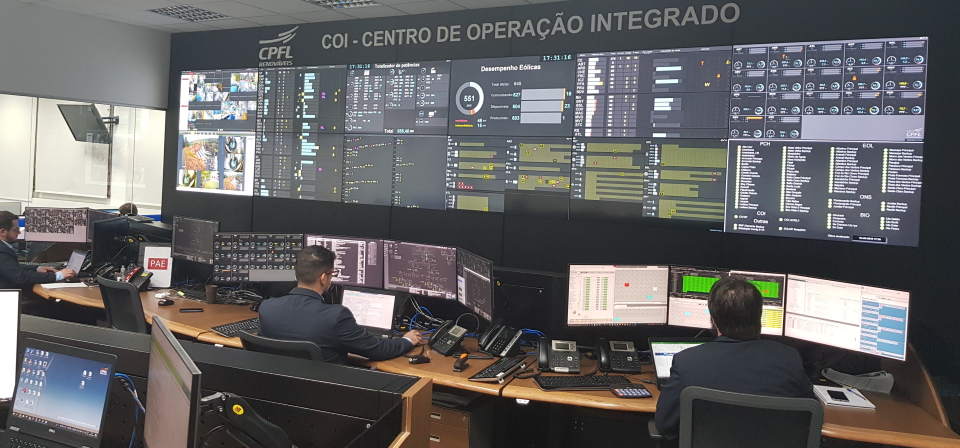
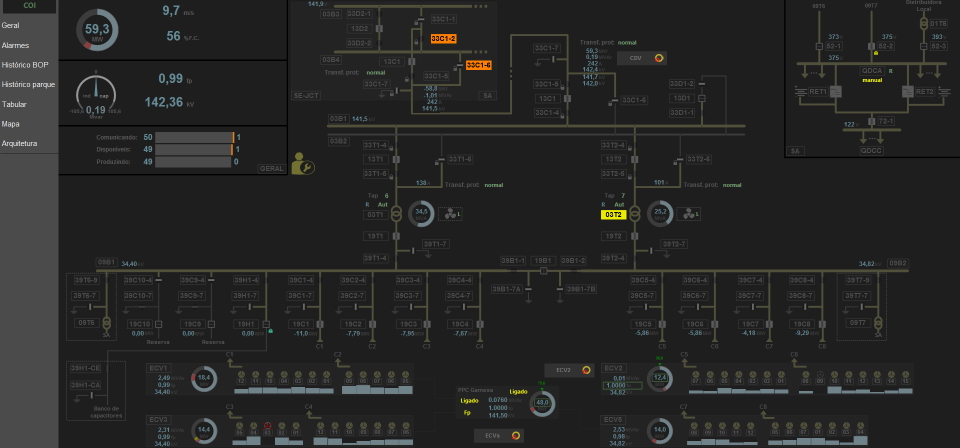
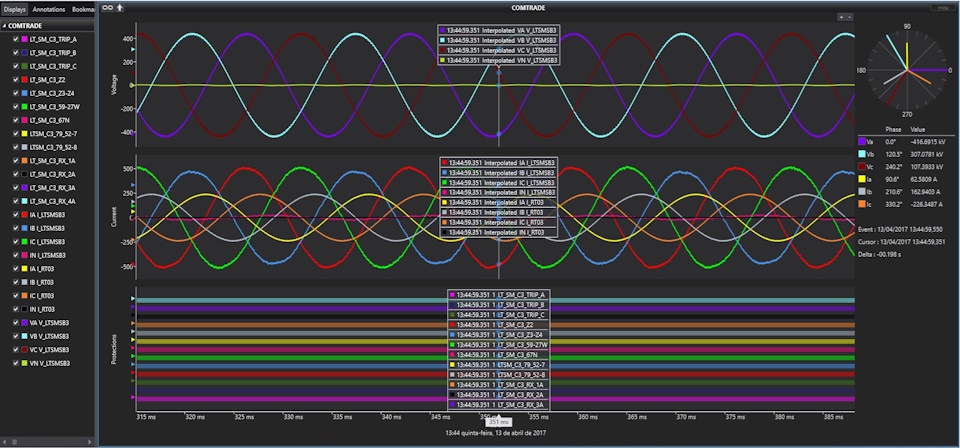
Add-on modules can be added to the platform, such as the Submodule 2.7 library for sending data to Brazil’s National Electric System Operator (ONS) and the Disturbance library for viewing and analyzing disturbances recorded by wind turbine protections. All modules share a single operating interface, which increases efficiency and operational safety.
Features
- Single platform for substation and generation events: correlates events from both sources for better analysis of turbine stops
- Oscillography analysis tool: improves protection settings, reduces nuisance trips, and raises wind turbine availability
- Extensive driver library: more than 500 drivers for communication with equipment from any vendor
- Submodule 2.7 library for regulatory reporting: groups events logically, simplifies integrations, and reduces regulatory fines and man-hours
- Standardized report templates: reduce engineering time and increase reliability
- Historical database: supports decisions on future investments
Benefits
- Higher wind turbine availability
- Lower financial losses in contracts with vendors
- Safer, more efficient farm operations
- Reduced regulatory risks and fines
- Shorter engineering and implementation time
- More accurate decisions on new investments
Licensing
| Substations | n |
| Wind Power Plant | n |
| Photovoltaic Power Plant | n |
| Viewers | 1 (included) + 4 (optional) |
| Drivers | n |
| I/O points | 1,500 to 600,000 |
| Storage | 1,500 to 600,000 |
| Hot-Standby | Yes (optional) |
| Viewers-Only | 5 (optional) |
| Additional modules | Load shedding (optional) |
Disturbance records from intelligent electronic devices (IEDs) are key sources of information for understanding system behavior and spotting problems on the power network. Engineering teams use these files after the fact for deeper analysis of disturbances, and ADMS and EMS solutions can process them automatically to identify faults and network dynamics.
Each IED vendor usually supplies its own tool for collecting oscillography data, so a utility may have to use several tools from different vendors to perform the same task. Since not all devices generate files in a widely used standard such as COMTRADE, and proprietary systems often cannot automate the process, retrieving oscillography data can be difficult and costly.
Over time, these files grow in both size and number, making it harder to match a given failure to its original record. Disturbance repositories are often created without backup or retention policies, which makes retrieval even harder.
Elipse Power Disturbance Manager is designed specifically for collecting, storing, and analyzing oscillography data from any IED vendor. Data can be collected through different protocols and media. The files are cataloged in an SQL database, COMTRADE files are saved to any repository on the network, and records can be viewed and analyzed in E3 Viewer or any COMTRADE-compatible third-party tool.
Benefits
- Shorter commissioning, with manual disturbance-retrieval tasks automated
- Fewer errors and easier maintenance, with collection unified and automated on a single platform
- Better-organized data for further analysis and reports
- Flexible integration with other processes and systems, such as bidirectional SCADA/EMS/ADMS communication
- More accurate fault detection and location when integrated with the FLISR module
Elipse Power Renewable success stories
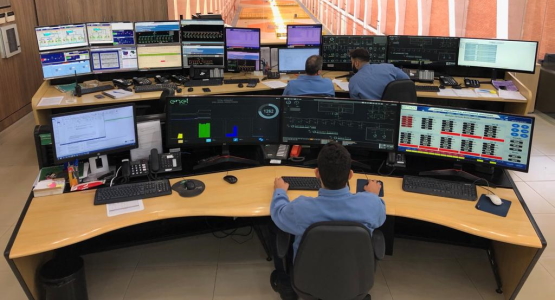 Elipse Software solutions automate 23 Enel Green Power plants in Brazil, communicate with equipment from different vendors
National leader in solar and wind power generation, Enel Green Power uses Elipse E3 and Elipse Power Renewable solutions
Read more →
Elipse Software solutions automate 23 Enel Green Power plants in Brazil, communicate with equipment from different vendors
National leader in solar and wind power generation, Enel Green Power uses Elipse E3 and Elipse Power Renewable solutions
Read more →
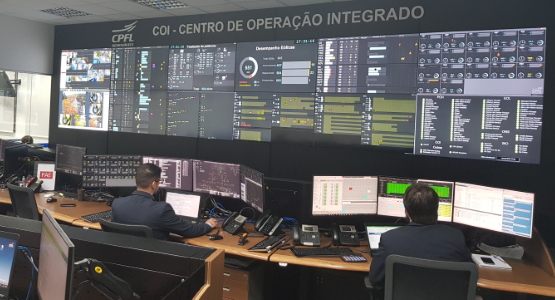 CPFL Renováveis upgrades its SCADA system to the Elipse platform and increases its operational efficiency in 35%
One of the largest SCADA applications in the Brazilian electric sector, with over 700,000 points, now has a new system with a simpler, more intuitive high-performance interface
Read more →
CPFL Renováveis upgrades its SCADA system to the Elipse platform and increases its operational efficiency in 35%
One of the largest SCADA applications in the Brazilian electric sector, with over 700,000 points, now has a new system with a simpler, more intuitive high-performance interface
Read more →
 Votorantim Energia’s plants at the users’ fingertips with Elipse Mobile
Elipse Software’s platform allows Votorantim Energia’s users to monitor the performances of its wind and hydroelectric plants via tablets or smartphones; operation is no longer restricted to the Operations Center
Read more →
Votorantim Energia’s plants at the users’ fingertips with Elipse Mobile
Elipse Software’s platform allows Votorantim Energia’s users to monitor the performances of its wind and hydroelectric plants via tablets or smartphones; operation is no longer restricted to the Operations Center
Read more →
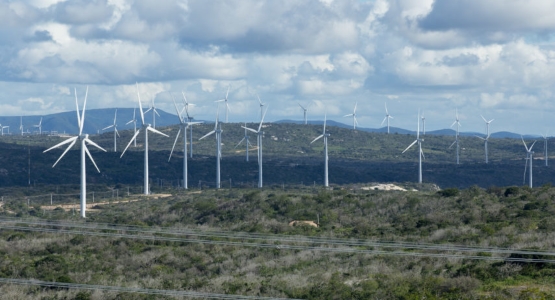 Elipse Software’s platforms generate savings for Echoenergia
Developed by Energia Automação and based on Elipse Power’s and Elipse Plant Manager’s framework, the ea-Wind solution controls Santa Rosália and São Clemente windfarm complexes
Read more →
Elipse Software’s platforms generate savings for Echoenergia
Developed by Energia Automação and based on Elipse Power’s and Elipse Plant Manager’s framework, the ea-Wind solution controls Santa Rosália and São Clemente windfarm complexes
Read more →
Related news
 Elipse Drivers 13 – October 2026
October 21, 2026
Check out the latest developments for Elipse drivers
Elipse Drivers 13 – October 2026
October 21, 2026
Check out the latest developments for Elipse drivers
 Elipse Software celebrates 40 years of history
October 1, 2026
Four decades after being founded by five young workmates in Porto Alegre, Brazil, the company has become a leading name in SCADA software worldwide
Elipse Software celebrates 40 years of history
October 1, 2026
Four decades after being founded by five young workmates in Porto Alegre, Brazil, the company has become a leading name in SCADA software worldwide
 Elipse Drivers 12 – August/2026
August 19, 2026
Check out the latest developments for Elipse drivers
Elipse Drivers 12 – August/2026
August 19, 2026
Check out the latest developments for Elipse drivers
 Elipse Plant Manager version 7.0: more autonomy for assets management
May 26, 2026
The platform by Elipse Software was updated to improve process monitoring, thus optimizing the generation of indicators and real-time data analysis
Elipse Plant Manager version 7.0: more autonomy for assets management
May 26, 2026
The platform by Elipse Software was updated to improve process monitoring, thus optimizing the generation of indicators and real-time data analysis
