
From too few alarms to too many
Before industrial plants went digital, every new alarm had to be carefully justified. Alarms were typically indicator lights or backlit panels, which were expensive and had to be installed by hand.
With digitalization, and with supervision and control through DCS and SCADA systems, the cost of adding an alarm dropped to almost zero. To be on the safe side, engineers often configured every variable in a project as an alarm, and many still do. On top of that, the graphical interfaces of these systems rarely followed guidelines that help operators spot and solve problems.
As a result, many plants still flood their operators with alarms. When the system is full of alarms, it becomes hard to tell the critical ones from those that are only informational, and accidents have happened, and still happen, because of it.
The standards that set the benchmark
Organizations such as EEMUA and NAMUR began studying the problem in depth to propose improvements and new approaches. Today, two standards are the benchmark for good practice in this area:
- ANSI/ISA 18.2 defines principles and processes for modeling and managing alarms and events, with a focus on their lifecycle. The lifecycle covers every stage needed to manage an alarm system properly, from inception to implementation and optimization. It works as a continuous improvement loop, in the PDCA style (Plan-Do-Check-Act), and it never closes.
- ANSI/ISA 101 sets recommended practices for human-machine interfaces. Following its methodology helps users work more effectively and improves safety, quality, productivity, and reliability.
Used together, the two standards offer a clear path to solving alarm overload.
The alarm lifecycle
The ISA 18.2 lifecycle starts with each company’s alarm philosophy: how it will handle alarms. From there, it defines each alarm’s purpose, concept, and implementation.
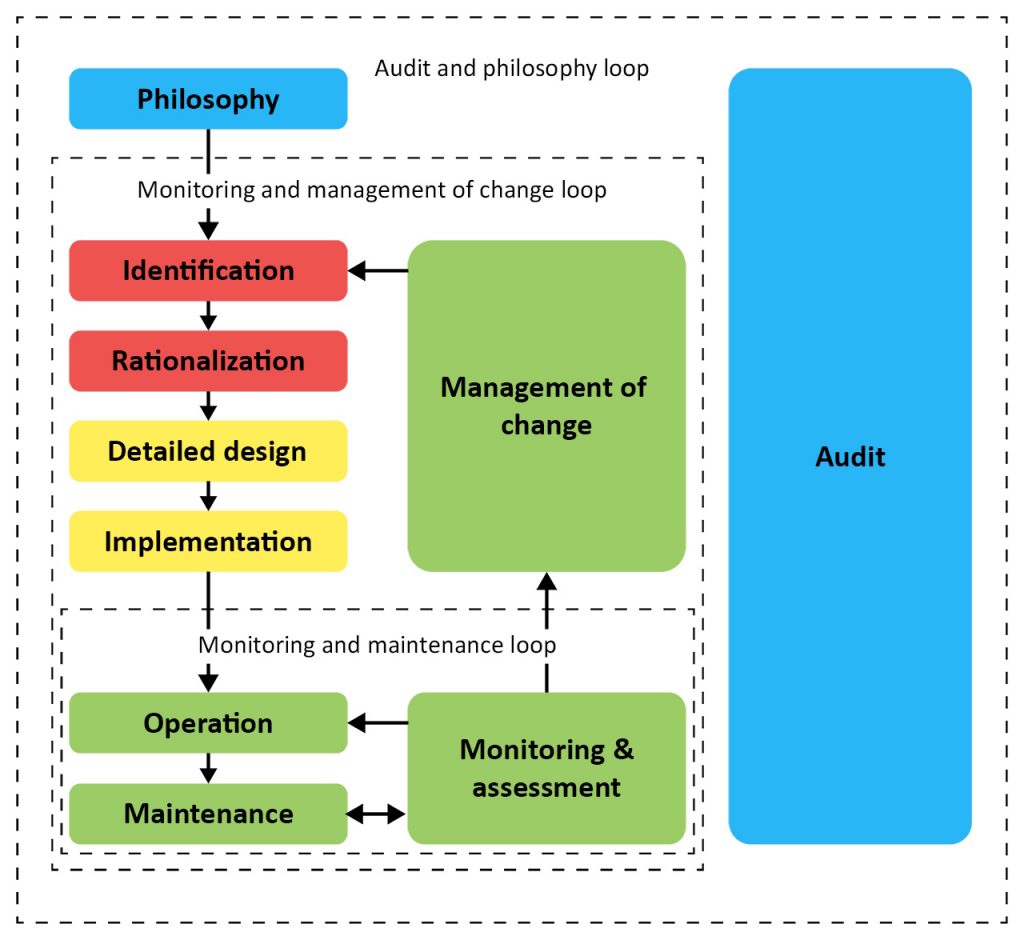
After the identification, rationalization, detailed design, and implementation stages, the monitoring and maintenance loop begins. This is when alarms are operated and maintained. Monitoring alone isn’t enough. Teams also need to assess whether each alarm still does its job, because the process changes over time. Faulty sensors, seasonality, and other factors can make an alarm obsolete or, worse, so noisy that it distracts operators.
Based on this assessment, new alarms are added and the system configuration is updated, with every change recorded in the audit stage. Then the cycle starts again.
Elipse Alarm Manager
Elipse Alarm Manager (ELAM) is Elipse Software’s alarm management tool. It lets you track this lifecycle in a flexible, customizable way, and it connects both to Elipse SCADA platforms (E3, Power, and Water) and to third-party systems.
Related cases
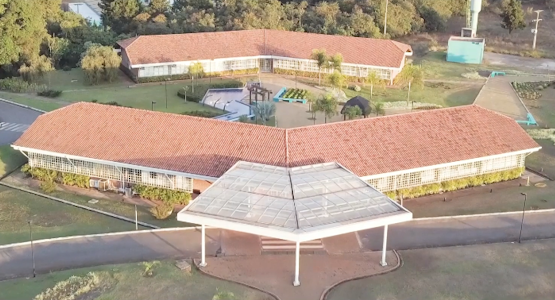 Elipse E3 improves control at Vale’s sinter pilot plants
Elipse Software’s platform streamlines data acquisition, maintenance, and operation at the mining company’s Ferrous Technology Center (CTF) in Nova Lima, Minas Gerais, Brazil
Read more →
Elipse E3 improves control at Vale’s sinter pilot plants
Elipse Software’s platform streamlines data acquisition, maintenance, and operation at the mining company’s Ferrous Technology Center (CTF) in Nova Lima, Minas Gerais, Brazil
Read more →
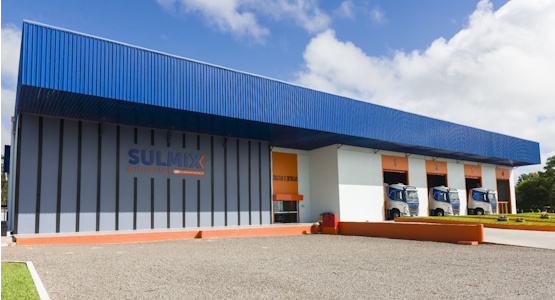 Elipse E3 and ERP interact in application at Sulmix to control production and formulas more efficiently
With the platform by Elipse Software, Sulmix can ensure clients that their orders will be delivered according to the best practices in the market and following inspection agencies’ standards
Read more →
Elipse E3 and ERP interact in application at Sulmix to control production and formulas more efficiently
With the platform by Elipse Software, Sulmix can ensure clients that their orders will be delivered according to the best practices in the market and following inspection agencies’ standards
Read more →
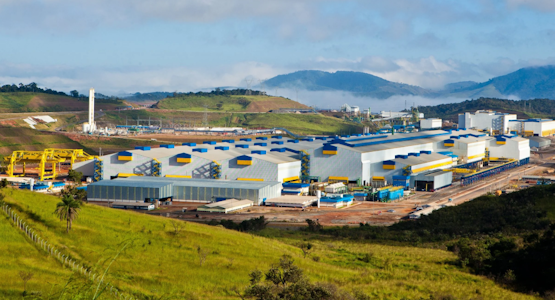 Vallourec Jeceaba’s application easily developed and expanded with Elipse FlexControl
Steel plant that manufactures Vallourec tubes in Jeceaba (MG) can edit the configuration of their machinery with platform developed by Elipse Software
Read more →
Vallourec Jeceaba’s application easily developed and expanded with Elipse FlexControl
Steel plant that manufactures Vallourec tubes in Jeceaba (MG) can edit the configuration of their machinery with platform developed by Elipse Software
Read more →