
Elipse Plant Manager (EPM) collects data from many types of devices, whatever their protocol, then transforms that data, analyzes it, and triggers dynamic actions. That closes the digital monitoring loop.
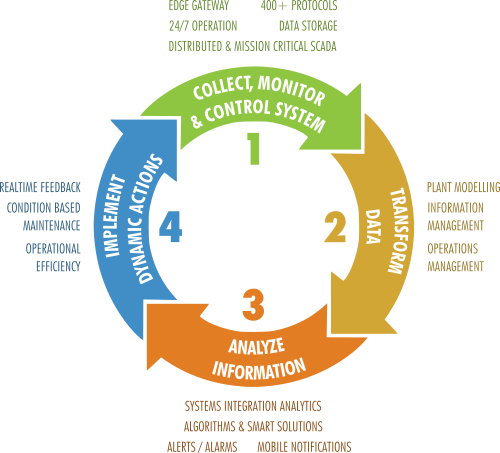
The first step in the loop is data collection, which is handled by EPM Interface Server. It can be deployed in three architectures, depending on where the data comes from:
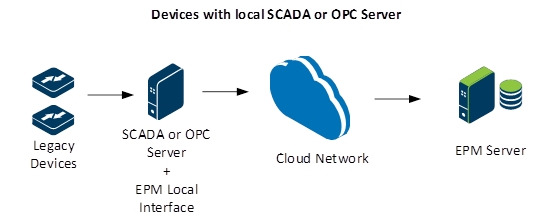
1) Legacy devices with an existing data collection system (SCADA or OPC server)
EPM Interface Server is installed on the machine that runs the current system and sends data to a remote EPM Server. This setup has two benefits. First, data is converted to a secure, encrypted format that can pass through firewalls. Second, it enables store-and-forward: if the connection between the Interface Server and EPM Server drops, data is buffered locally and sent once the connection is restored, so collection is never interrupted.
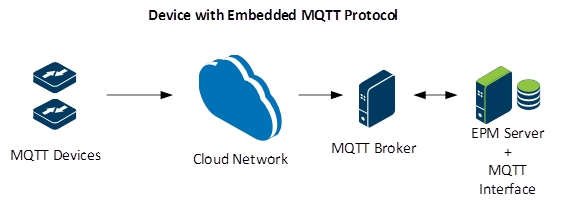
2) Devices with embedded MQTT
EPM has a native MQTT interface, so devices can send data directly to a remote MQTT broker, and from there to EPM Server.
3) Legacy devices with no data collection system
A local gateway is installed to translate the existing protocols. EPM Collector and EPM Interface Server both run on this gateway, which then sends data to the remote EPM Server.
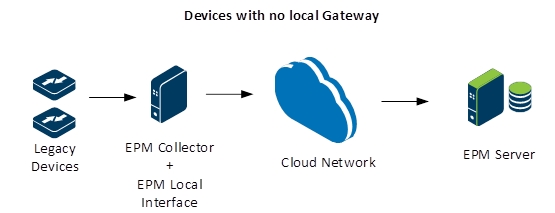
EPM Collector is a customized version of Elipse E3 Gateway, built exclusively for EPM. It runs more than 500 I/O drivers developed by Elipse Software to collect and pre-process data.
Once the data reaches EPM, it is organized, structured into assets (such as devices and machines), and stored. From there, values can be retrieved for different contexts and purposes.
EPM Processor makes it easy to apply analytics and calculations to the data, including machine learning. Results can be viewed through customized dashboards, alerts, and reports.
When EPM runs alongside Elipse E3, Elipse Power, or another SCADA system, calculation results are delivered automatically via OPC UA. That makes it simple to build process optimization applications and create smart digital loops that raise operational efficiency.
From defining the indicator or process to monitor, through collecting data, running calculations, and checking the results against operating limits, EPM covers every step. It can also alert users so they can take preventive or corrective action.
Trusted by leading companies in Brazil and around the world



Elipse Plant Manager IoT success stories
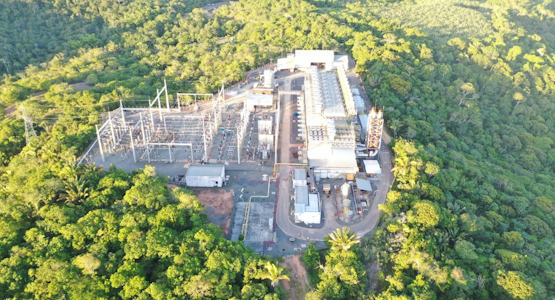 Elipse Plant Manager optimizes tracking of processes at Recôncavo Energia
The platform by Elipse Software streamlines Recôncavo Energia’s data retrieval from natural gas wells that supply Imetame Termelétrica’s four plants
Read more →
Elipse Plant Manager optimizes tracking of processes at Recôncavo Energia
The platform by Elipse Software streamlines Recôncavo Energia’s data retrieval from natural gas wells that supply Imetame Termelétrica’s four plants
Read more →
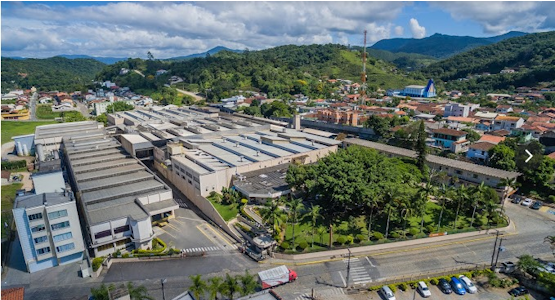 Elipse Plant Manager and Elipse E3 facilitate preventive maintenance at ZEN S.A. for a more efficient production
Elipse Software’s platforms monitor different pieces of equipment at automotive manufacturer ZEN S.A., stave off high maintenance costs of up to U$ 15 thousand per month
Read more →
Elipse Plant Manager and Elipse E3 facilitate preventive maintenance at ZEN S.A. for a more efficient production
Elipse Software’s platforms monitor different pieces of equipment at automotive manufacturer ZEN S.A., stave off high maintenance costs of up to U$ 15 thousand per month
Read more →
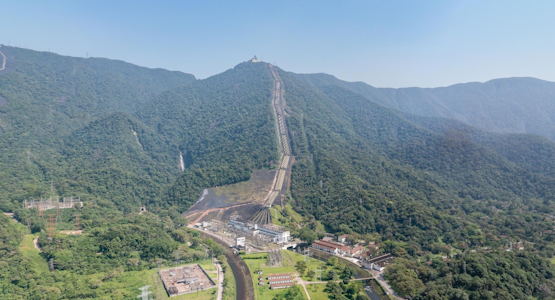 EMAE cuts the number of screens controling the Henry Borden Plant by 90% thanks to Elipse Power
Retrofitting and implementing Elipse Software’s platform allows EMAE to control its plant via 30 screens instead of the previous 475, thus optimizing the operation
Read more →
EMAE cuts the number of screens controling the Henry Borden Plant by 90% thanks to Elipse Power
Retrofitting and implementing Elipse Software’s platform allows EMAE to control its plant via 30 screens instead of the previous 475, thus optimizing the operation
Read more →
Related News
 Elipse Plant Manager version 7.0: more autonomy for assets management
26/05/2026
The platform by Elipse Software was updated to improve process monitoring, thus optimizing the generation of indicators and real-time data analysis
Elipse Plant Manager version 7.0: more autonomy for assets management
26/05/2026
The platform by Elipse Software was updated to improve process monitoring, thus optimizing the generation of indicators and real-time data analysis
 Elipse Plant Manager version 6.5 update
03/11/2025
EPM Portal features new interface layouts that optimize access and usability
Elipse Plant Manager version 6.5 update
03/11/2025
EPM Portal features new interface layouts that optimize access and usability
 Elipse Plant Manager version 6.0 update
30/01/2025
EPM 6.0 features a new Driver Interface compatible with several automation devices
Elipse Plant Manager version 6.0 update
30/01/2025
EPM 6.0 features a new Driver Interface compatible with several automation devices
 Elipse Plant Manager updated
21/08/2023
EPM version 5.0 now supports PostgreSQL, in addition to new widgets and visual resources
Elipse Plant Manager updated
21/08/2023
EPM version 5.0 now supports PostgreSQL, in addition to new widgets and visual resources
