
Elipse Plant Manager and Elipse E3 facilitate preventive maintenance at ZEN S.A. for a more efficient production
Elipse Software’s platforms monitor different pieces of equipment at automotive manufacturer ZEN S.A., stave off high maintenance costs of up to U$ 15 thousand per month
Published on 04/14/2024

Needs
Headquartered in Brusque (SC), ZEN S.A. has been operating in the automotive sector since 1960 and is the independent world leader in starter drivers. Currently, the company is a major manufacturer of spare parts for the global market. With more than 1,000 employees, it is considered one of the most innovative companies in the South of Brazil and allocates about 5% of its annual revenue to Research and Development.
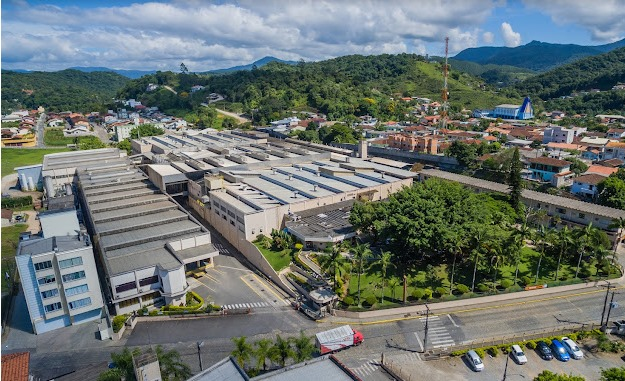
The productive process taking place at ZEN plant is rather complex, comprising a series of different machines that use numerous communication protocols. In order to centralize production control and optimize its maintenance, the company has decided to adopt two platforms by Elipse Software, a global player developing solutions for process management in real time.
ZEN has chosen Elipse E3 and Elipse Plant Manager (EPM) because they fit the company’s purposes perfectly. The application featuring both platforms was implemented by TagInfo Treinamentos e Manutenção de Softwares e Hardwares, a solution provider working for the industrial automation and information technology sectors.
Solution
With the Elipse platforms, ZEN was able to better handle the situations from different areas in their productive plant. Elipse E3 allows generating alarms and registering limits for setpoints regarding some variables in the machinery and its working hours (Hobbs meters). If one of these setpoints is not respected, an alarm fires, followed by a maintenance order (MO).
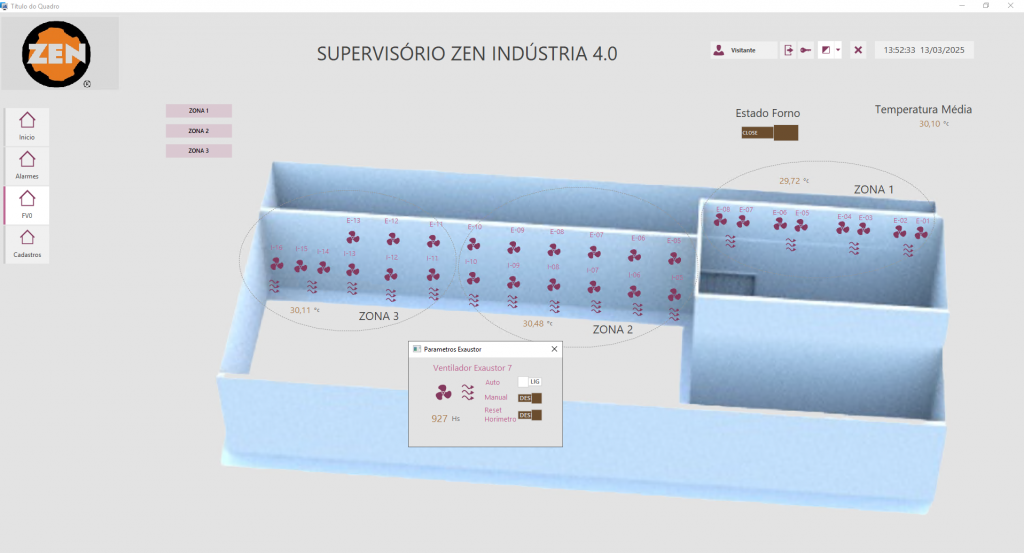
Additionally, Elipse E3 features a screen where it is possible to monitor the status of the big furnace installed in one of the plant’s pavilions (open/closed, local temperature). It’s also possible to check the working times of the exhaust fans in the pavilion and to supervise their statuses (manual/automatic, on/off), as well as to fire them remotely.
Elipse Plant Manager (EPM) monitors the variables and behavior of several different machines in the plant and displays them as dashboards and charts. To do so, EPM Processor captures data previously collected by WEG’s vibrating sensors and stored in the cloud. The platform also reads data from the machinery’s PLCs, as well as generates maintenance orders (MO) via Manusis software.
On the start screen, EPM Portal displays the plant layout where colored spheres stand for each of the plant’s sectors, such as utilities, machining, forming, etc. When one of the spheres is green, it means the sector is in good condition and has no alarms. A red sphere, otherwise, means bad conditions and the presence of alarms.
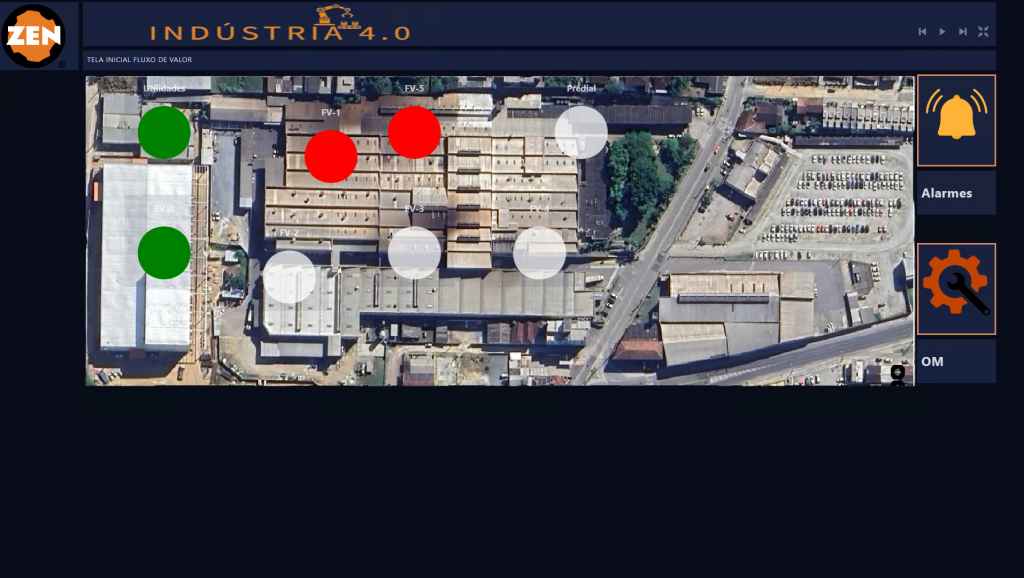
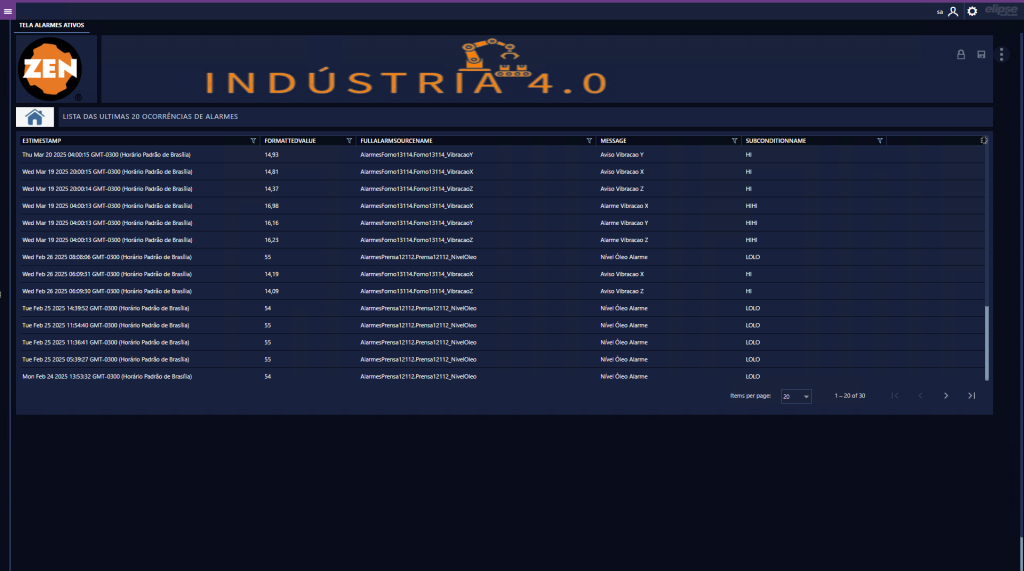
If there is an alarm or MO, the software causes the icons’ margin to blink on screen. Once it happens, the user must then click on the corresponding icon to have access to more information about the open alarms or MOs.
By clicking any sphere on the start screen, EPM Portal allows operators to monitor the health of the machinery in the sector. To illustrate it, the software uses heart-shaped figures to indicate the conditions of each press, furnace, boiler, and all other pieces of equipment. Green heart = healthy machine; yellow = alert; red = alert; gray = communication is down.
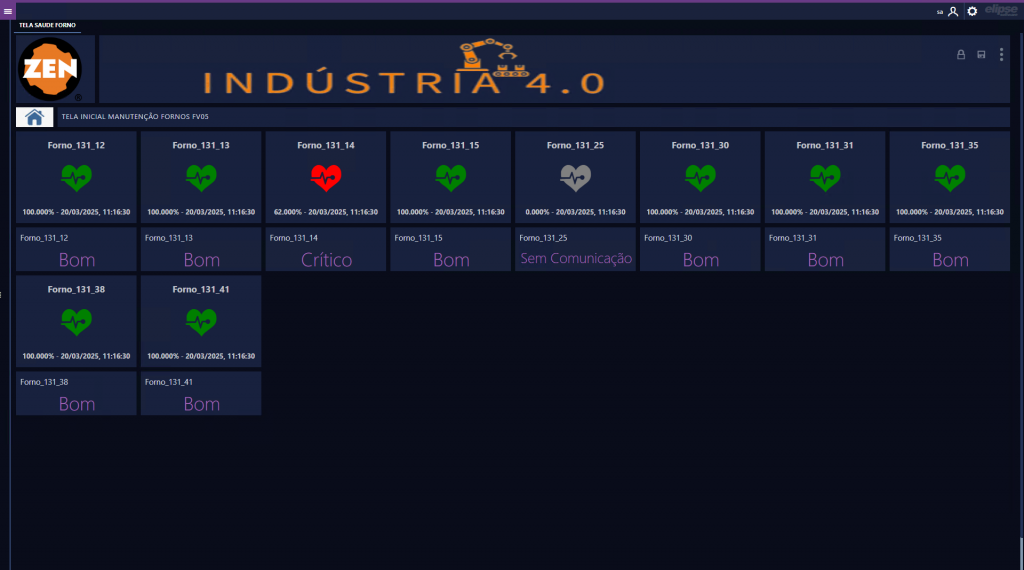
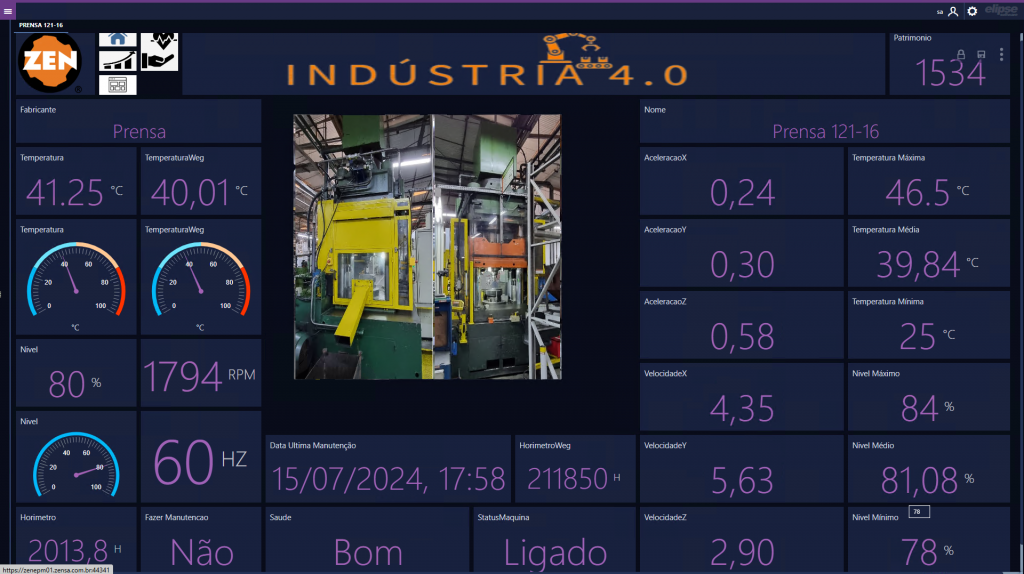
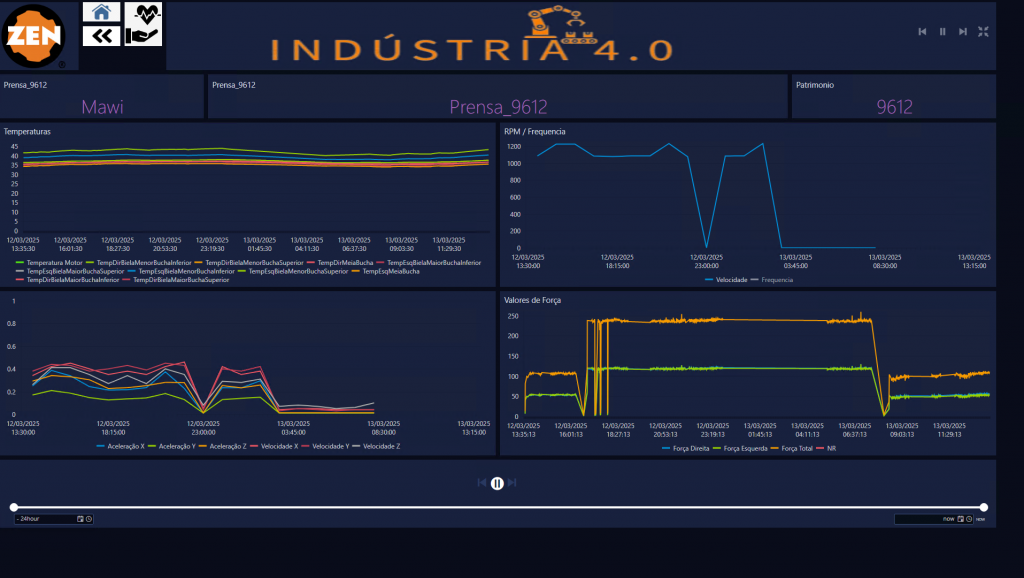
In addition to this macro control, EPM Portal also allows monitoring machines individually. By clicking the heart representing a press, for example, a new screen pops up where its temperatures, frequency, and oil levels can be visualized.
The acceleration and speed values observed at their hydraulic pumps’ engine axes are also supervised, as well as each engine’s rotation per minute (RPM). In addition, EPM Portal displays the press’s working hours, its status, whether it works properly or requires maintenance, date/time of its last maintenance, and whether it’s on or off.
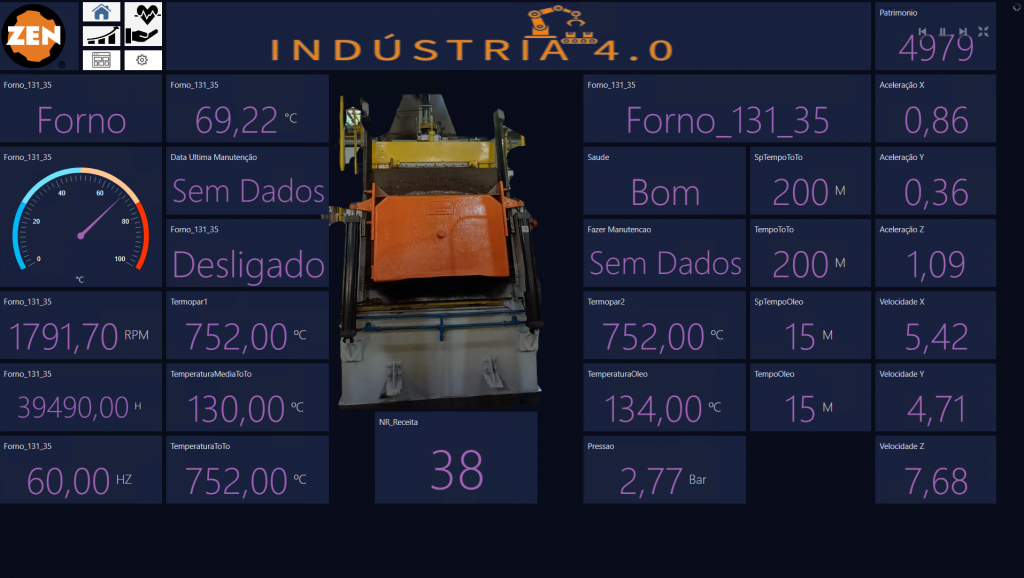
Just as it does for presses, EPM Portal also allows monitoring each furnace at the ZEN plant. Via software, it’s possible to supervise data such as temperatures, oil levels, frequency, status, ok/needs maintenance, and on/off.
The acceleration and vibration speed from the furnace’s re-circulator’s engine axes are monitored too. This control is instrumental for avoiding breaking high-cost equipment, such as the refractory lining, whose estimated cost is 15,000 dollars.
EPM Portal also features a system for sending messages to the maintenance staff via Telegram app whenever the oven is required to be turned on when there is no one at the plant. This system is of the utmost importance, since furnaces must always be on as well as pre-heated so that production is not delayed.
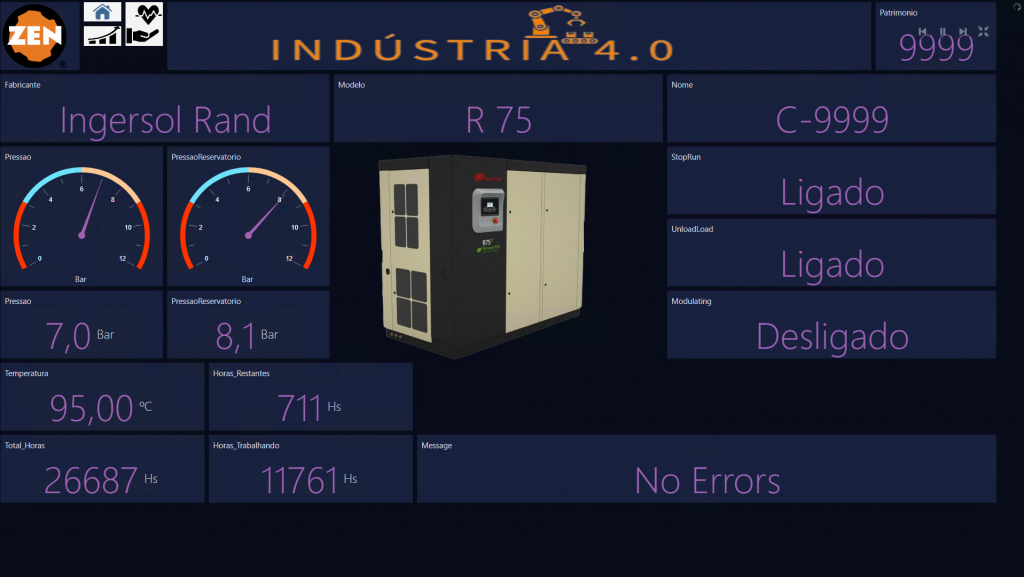
With EPM Portal, it’s possible to monitor the compressors’ temperatures, pressures, statuses, and maintenance work- and idle-time. In addition, it’s possible to check whether the machine is on and loaded, generating compressed air.
As with boilers, EPM Portal allows the monitoring of their pumps’ temperature, pressures, and (most importantly), their status and Hobbs meters. This facilitates spotting pumps in need of maintenance due to working for longer hours and being worn out.
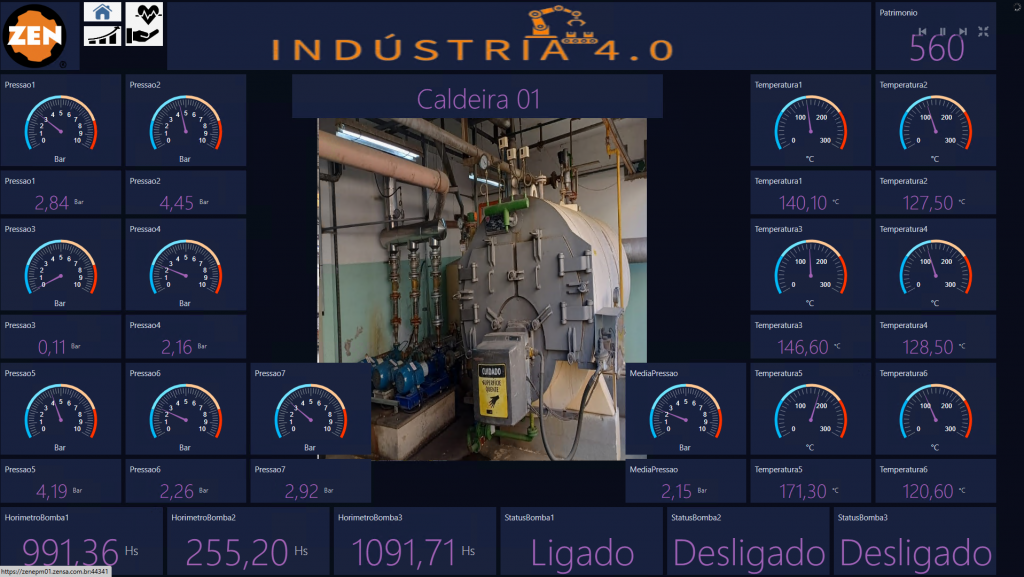
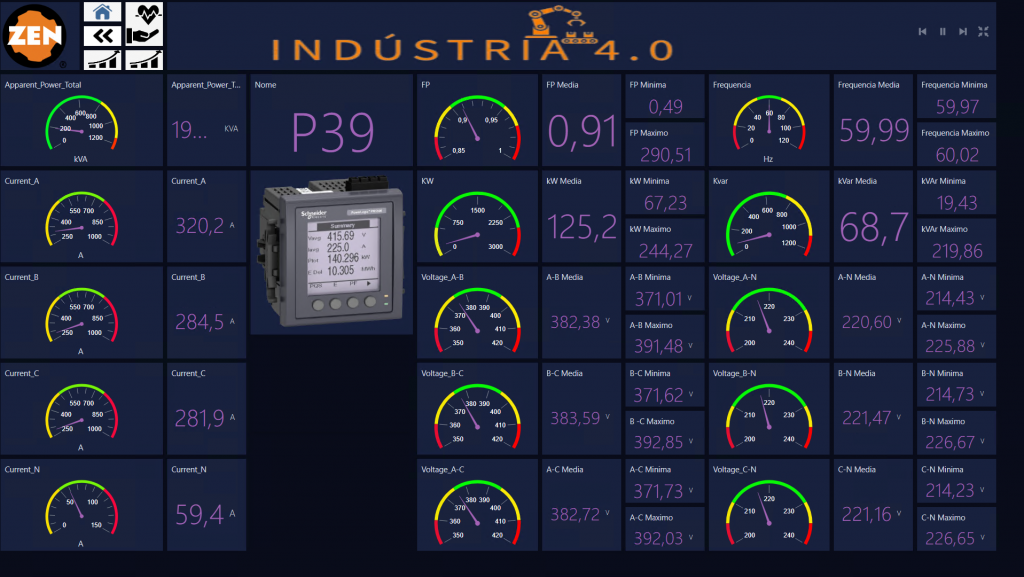
Energy control is also fundamental to the system. To do so, ZEN uses a series of multimeters that collect data from the transformers supplying the plant. EPM Portal then captures data from these multimeters and displays it on screen.
These screens allow the software to monitor all currents, potencies, and potency factors, as well as minimum, maximum, average, and real-time frequencies recorded on the last 24 hours. If energy consumption is about to exceed the limits for peak hours (that is, the period when energy consumption tends to reach higher limits), EPM Portal will then immediately fire an e-mail alerting the maintenance crew.
As for the monthly control, there is a record of the demand hired monthly; there, a Python code executed by the EPM Processor analyses actual consumption against the expected consumption for the month. With this intel, the manager can gauge whether the power consumption will extrapolate the monthly budget and then act preemptively on it by turning off equipment for the weekend or by buying extra energy from the free market.
EPM Portal also allows following different variables graphically in a customized time interval. In a nutshell, via EPM and Elipse E3, ZEN is able to overview the health of its machinery and the energy consumption from all sectors in the plant. And all of this is possible due the two Elipse Software’s platforms, which feature resources that allows them not only to monitor, but also run a series of analysis that aim at taking more preventive, efficient decisions.
Benefits
Ciro Quaiato, ZEN’s Maintenance Analyst, says Elipse’s platforms were employed to improve maintenance. According to him, the continuous monitoring made by the software has helped predict failure and analyze data, thus making the machines more reliable.
“These systems allow us to carry out a larger number of preventive maintenance measures, which in turn cuts down on the number of interruptions and makes the production process more efficient and reliable. With this approach, ZEN’s maintenance structure positions itself as the state of the art in the global market,” he says.
Quaiato cites other main benefits Elipse E3 and EPM have brought to ZEN, among which are:
- Monitoring the furnace’s re-circulator’s engine vibration: Excessive vibration would impact directly in the integrity of the furnace’s refractory lining, which in turn would lead to unplanned production stoppage (24 hours to 1 week for repairs) and high maintenance costs (that would cost as much as U$ 15,000). With this monitoring, it’s possible to spot anomalies in the vibration pattern and carry out faster, more cost-effective preventive interventions, such as preemptive substitution of rolling bearings.
- Monitoring the forging presses’ hydraulic pumps’ engines vibration: This resource is crucial for mitigating unprogrammed stoppage and unexpected costs. Through continuous analysis of vibration data, it is possible to predict impending failures and employ preventive measures that will ensure process continuity and reduction of operational costs.
- Monitoring the excentric presses’ effort: Previously, the overload in eccentric presses resulted in broken connecting rods with no detailed history to analyze the root cause. With the continued monitoring via Elipse platforms, the mechanical efforts are recorded in real time, which activates preventive alerts whenever the equipment nears its operational limits. Additionally, stored data enables detailed analyses which prevent eventual failures.
- AI management of hydraulic oil: Sensors were implemented to monitor the tank’s oil level. With them, the system can run a daily analysis of intake values, which allows spotting any leaks or anomalous expenditure. This information is invaluable for optimizing the cost of manufactured goods, correlating oil consumption with production.
- Vibration predictive analysis: Before the project was implemented, the vibration analysis was conducted by a third party, which resulted mostly in unreliable diagnoses. Sometimes, pieces of equipment were wrongly retired; other times, critical failures occurred after the inspection took place. Now, the vibration is monitored daily by the Elipse solution, which caused significant improvement on how precise the equipment status is assessed. This helped cut off unnecessary costs with inaccurate analyses and optimize corrective interventions.
- Monitoring energy consumption and transformers: This system allows the segmented analysis of energetic usage per sector. That way, it is possible to identify areas of higher consumption and then enable strategies to reduce costs and increase competitiveness in the market. Concurrently, the monitoring of electric energy transformers started, comprising the temperature in each coil and the electric current associated with it. The correlation between these measurements allows for the early detection of flaws in order to plan preventive maintenance. This is a crucial strategy, since a failure in the transformer can impact the whole production.
Datasheet
- Client
- ZEN S.A.
- Solution provider
- TagInfo Treinamentos e Manutenção de Softwares e Hardwares
- Elipse products
- Elipse E3 and Elipse Plant Manager
- Platform
- Windows Server Standard 2019
- Number of copies
- 4 (1 E3 Viewer Lite + 3 EPM Portal)
- Number of I/O points
- 2,000 (500 E3 Lite + 1,500 EPM 6.0)
- Drivers
- Modbus, MProt, Modbus CCK, Script, OPCUA, MQTT, NodeRed, and OPCDA
