
Elipse Water
Elipse Water is an evolution of the Elipse E3 SCADA system, designed for the management needs of water and wastewater systems. It is the ideal platform for optimizing the systems, people, and processes involved in water and wastewater operations and making them more efficient.
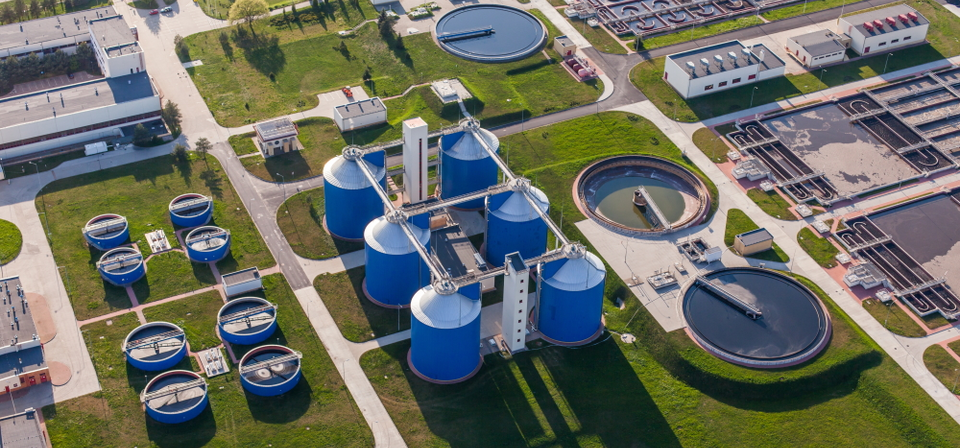
The history of automation in Brazil’s water and wastewater sector is closely tied to the history of Elipse Software itself. For more than 35 years, Elipse has been a constant presence in the sector, continuously driving its modernization and efficiency. With the requirements of Brazil’s new Legal Framework for Sanitation and the challenges of Industry 4.0, a new chapter of this story is being written with Elipse Water, a product developed specifically for the challenges faced by water and wastewater companies.
Elipse Water was designed not only to add value to the data and systems companies already have, but also to take advantage of new IoT resources.
Platform
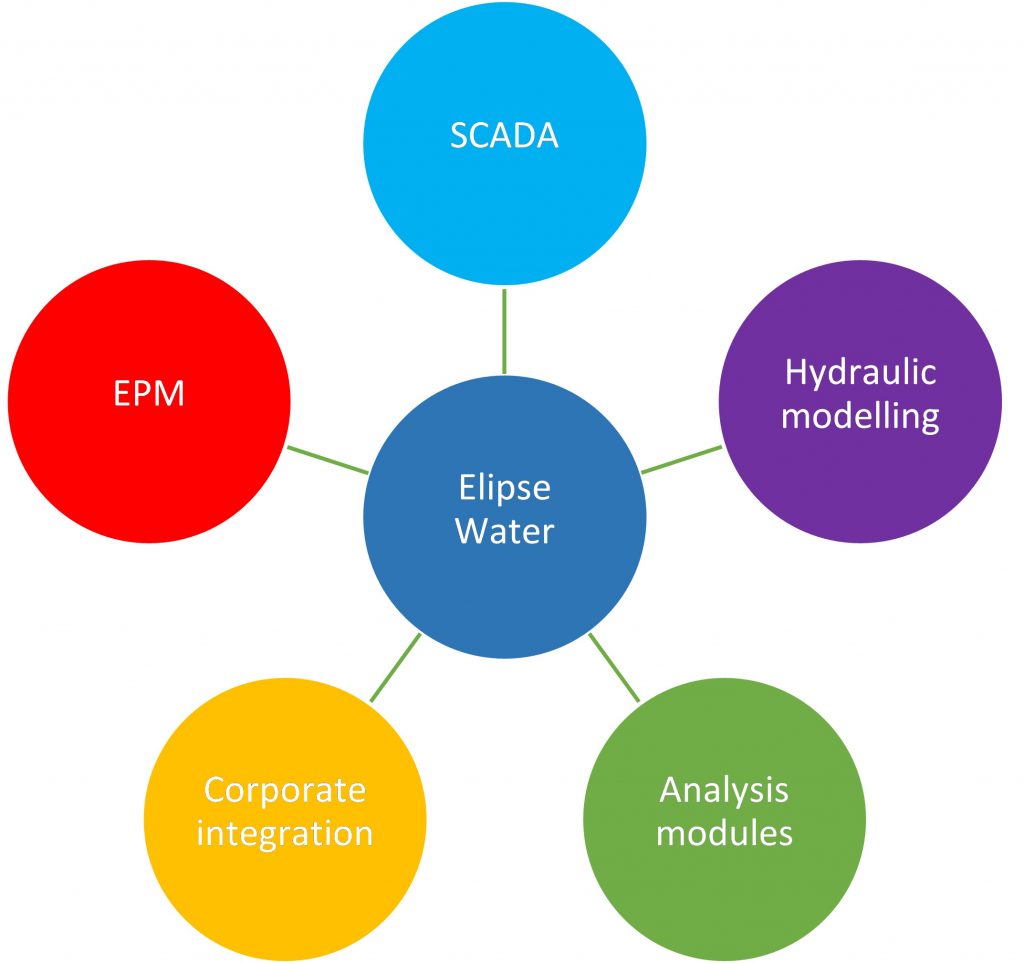
Because Elipse Water is built on Elipse E3, it offers all of E3’s technical features, plus:
- Elipse Plant Manager (EPM) features
- Integration with unified asset records
- Hydraulic modeling
- Native objects to represent system components
- Advanced analysis and control modules
Hydraulic Modeling
The first step in configuring Elipse Water is defining the system to be monitored and controlled, which is done through hydraulic modeling. Elipse Water provides an integrated CAD environment for modeling the network. Depending on the company’s needs, it can also import unified records from GIS systems or any existing hydraulic modeling database, such as EPANET.
Modeling defines the system topology and the parameters of every device (asset) on the network, generating a local database with all the information the analysis algorithms need.
It also creates a hierarchical structure that places every real-time measurement and command in the context of the registered equipment, which makes integration with other applications easier.
The data structuring objects are native to Elipse Water. They provide a clearer view of the project and sharply reduce the time and cost of developing, implementing, and maintaining the SCADA system.
The unified asset records include:
- All measurement stations and relevant equipment, such as pumps, valves, and reservoirs
- A connectivity model between devices, which serves as the basis for real-time analysis, simulations, and calculations
- Standardized measurements for interpreting relevant statuses, such as level, pressure, flow, volume, energy, power, and valve status
- Hydraulic parameters of each component
Screen Objects
Once the hydraulic model is created, Elipse Water automatically generates SCADA screens for supervision and control, using object libraries to represent each network component. You can edit these libraries to suit your company’s needs, and the screens can be changed and reimported at any time.
Schematic View Module
Water distribution networks have traditionally been managed with Geographic Information Systems (GIS), which offer a broad view of the system and support the dispatch of leak detection and maintenance crews. However, information overload in GIS often keeps operators from interpreting SCADA data correctly and in time. Easy, intuitive access to remotely controlled equipment can be a major asset for operators who must make decisions under pressure.
Smart city trends point to strong growth in the number of connected devices, and much of their data will flow through SCADA systems. With this in mind, Elipse Software developed a tool that generates schematic views for real-time operation. The module reads the records in the Water Model DB, populated with data imported from GIS, and automatically creates operating diagrams that keep all relevant information, such as pumps, measurement points, and tanks, while respecting the hydraulic topology between them.
Integrating Elipse Water with the company’s GIS database also reveals when changes to the unified records have made the current schematic views out of date. This prevents diagrams that no longer reflect the actual system and makes maintaining SCADA operating screens safer and more efficient.
Connectivity
Elipse Water supports a wide range of communication drivers developed by Elipse Software, with more than 500 drivers available, including MQTT and OPC UA. The software can also receive values from other sources, such as operator input, calculated data, billing data, and data from other control centers.
Historical Data
Elipse Water integrates features from Elipse Plant Manager (EPM), Elipse’s PIMS, so real-time data is stored automatically in a structured, hierarchical way, making it easier to generate reports and alarms.
Leak Detection Module
This module monitors available flow and pressure measurements in real time and flags possible leaks by correlating measurements with the physical network model and the historical behavior of variables. Minimum night flow analysis in each district metered area (DMA) can also be used to detect leaks automatically. The module generates real-time indications that help operators make faster, more efficient, and more accurate decisions.
Water Balance Module
This module automates real-time indicator calculations and generates daily and monthly reports for the system as a whole and for each DMA. It also identifies DMAs automatically based on the measurement points on the network. New points are detected and handled automatically, generating a new set of DMAs according to the network topology.
System-wide indicators include:
- Volume produced
- Volume consumed
- Daily and monthly targets for volume supplied
- Distribution loss index
- Billing loss index
- Hourly consumption forecast for the system
DMA indicators include:
- DMA identification based on existing flow meters
- Measured vs. billed volume comparison
- Identification of DMAs with the largest gaps between measured and billed volumes
- Daily consumption per DMA
- Hourly consumption forecast per DMA
Benefits
- Protection of the company’s existing investments
- Shorter implementation, expansion, and maintenance time
- Less training time for SCADA staff
- More efficient operation and more accurate planning as more system variables are monitored
- More intuitive operating screens (ISA-101) that improve efficiency and safety and speed up operator response
- Fewer man-hours to produce daily and monthly reports
- Accessible, available information to guide management and operating decisions
- Better control of the volumes available in the system, minimizing energy costs and stagnant water in tanks and reservoirs
- Lower losses through better network pressure management
- Faster detection of large water losses, making the control center more proactive in countering leaks
Architecture
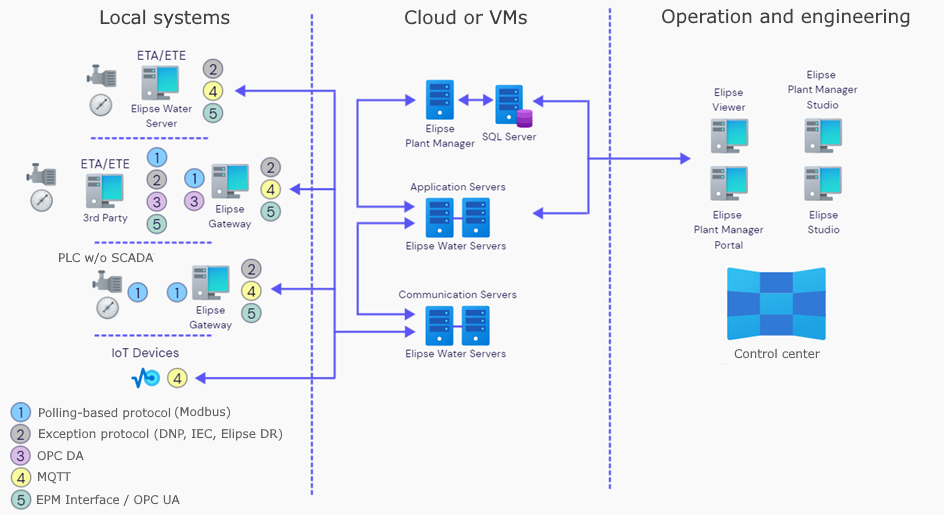
Elipse Water Standard/Basic
- Data collection from any type of device
- Standardized modeling of assets and their quantities, including measurements, statuses, and commands
- Contextualized, optimized data storage, with queries, calculations, and analyses available to every department
- Graphical interfaces developed according to ISA-101
- Basic IoT management (registration, placement, and data collection)
- Reports and dashboards:
- Connectivity with Power BI
- History of user actions and interactions
- Calculation and display of indicators that do not require hydraulic modeling
- Use of GIS and commercial system data
- Display of assets (instrumented or not) and geolocated events
- Hydraulic modeling
- Modules:
- Water balance module: manages measured and billed volumes
- Leak detection module: handles alarms based on the hydraulic model and depressurization (supply interruptions)
- Schematic view module
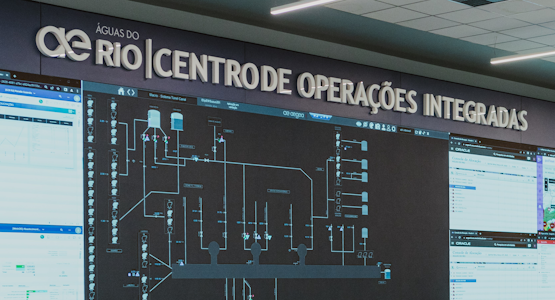
Elipse Water success stories
Related news
 Elipse Software celebrates 40 years of history
01/10/2026
Four decades after being founded by five young workmates in Porto Alegre, Brazil, the company has become a leading name in SCADA software worldwide
Elipse Software celebrates 40 years of history
01/10/2026
Four decades after being founded by five young workmates in Porto Alegre, Brazil, the company has become a leading name in SCADA software worldwide
 Elipse Drivers 12 – August/2026
19/08/2026
Check out the latest developments for Elipse drivers
Elipse Drivers 12 – August/2026
19/08/2026
Check out the latest developments for Elipse drivers
 Elipse Plant Manager version 7.0: more autonomy for assets management
26/05/2026
The platform by Elipse Software was updated to improve process monitoring, thus optimizing the generation of indicators and real-time data analysis
Elipse Plant Manager version 7.0: more autonomy for assets management
26/05/2026
The platform by Elipse Software was updated to improve process monitoring, thus optimizing the generation of indicators and real-time data analysis
 Elipse Drivers 11 – May/2026
15/05/2026
Check out the latest developments for Elipse drivers
Elipse Drivers 11 – May/2026
15/05/2026
Check out the latest developments for Elipse drivers
